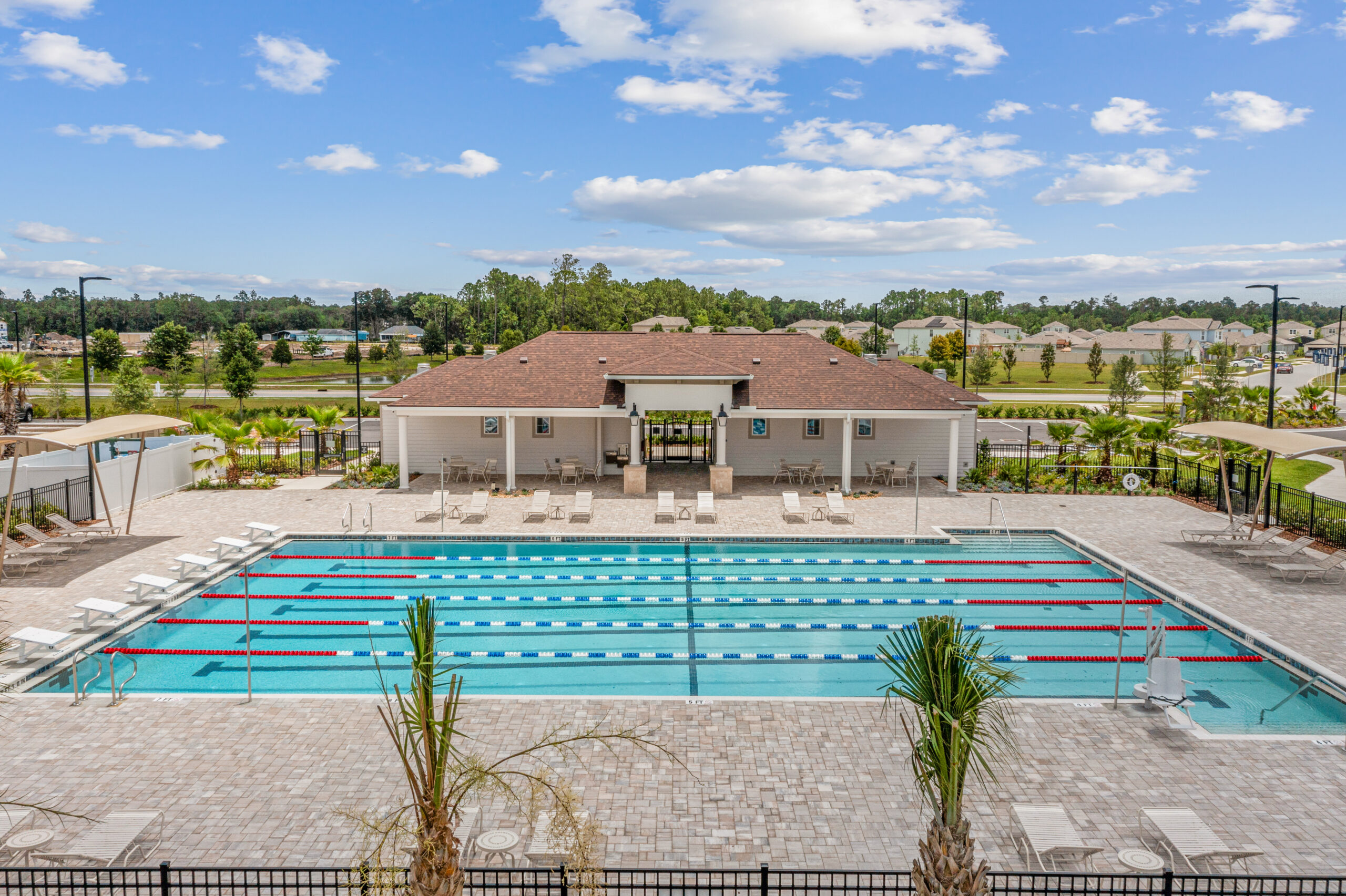
If you manage a community or commercial swimming pool, you’ve likely noticed a continuous tile line running across the pool floor or along the walls. It blends into the overall finish so seamlessly that most people assume it’s purely decorative.
It isn’t.
That tile line marks an expansion joint — one of the most structurally important and most commonly overlooked maintenance requirements in commercial aquatics. Understanding what it does, why it deteriorates, and what proper maintenance actually involves can mean the difference between a planned repair and an unexpected structural failure.
What an Expansion Joint Actually Does
A swimming pool shell, particularly in a commercial or community setting, is not a single continuous slab of concrete. It’s constructed in separate sections, which are then connected using sliding dowels embedded within a flexible sealant system.
This design exists for one reason: concrete moves. Temperature changes, soil shifting, and normal environmental conditions cause the pool shell to expand and contract throughout its lifetime. Without a properly functioning expansion joint, that movement has nowhere to go — and it finds a way out through cracks.
The expansion joint acts as a controlled separation point, absorbing that movement and directing it safely so the rest of the structure stays intact. The sealant bridging those two sections is what makes the system work.
Why the Sealant Doesn’t Last Forever
The sealant installed during original construction is not a permanent solution. It has a finite service life, and several factors accelerate its deterioration in pool environments:
— Water chemistry fluctuations. Pools that experience frequent swings in pH, alkalinity, or sanitizer levels place additional stress on the sealant material, breaking it down faster than a well-balanced system would.
— UV exposure. In outdoor pools, constant sun exposure degrades the sealant over time regardless of water chemistry.
— General wear and age. Even under ideal conditions, sealants don’t last indefinitely. In high-traffic commercial environments, that timeline shortens.
When sealant fails, the joint loses its ability to absorb structural movement. What follows can range from surface cracking to more significant damage to the pool shell — all of which carries a much higher repair cost than the maintenance it was designed to prevent.
What Proper Expansion Joint Maintenance Involves
This is not a cosmetic patch job, and it shouldn’t be treated as one. Proper expansion joint maintenance is a multi-step process that requires the pool to be taken fully out of service:
- Drain the pool completely.
- Remove the existing sealant — and in many cases, the double tile line that runs along the joint.
- Clear out the backer rod material underneath the sealant.
- Allow the area to dry fully. Any residual moisture will compromise the new installation.
- Install a new backer rod.
- Apply new sealant over the backer rod.
- If tile was removed, reset it after sealing is complete.
- Allow the new sealant to cure in a dry environment for approximately seven days before refilling.
Cutting corners on any of these steps — particularly the drying and curing phases — undermines the entire repair and shortens the lifespan of the new installation.
Plan for It Before It Becomes a Problem
Expansion joint maintenance should be built into a community pool’s long-term capital planning, not addressed reactively after visible damage appears. By the time cracking is obvious, the joint has already been failing for some time.
For HOA boards and community managers, the right approach is proactive: work with a qualified pool contractor to inspect expansion joints on a regular schedule, understand the expected service life of the current sealant, and plan for maintenance accordingly.
At Oak Wells Aquatics, we bring the same precision and craftsmanship to community pool projects that we bring to every custom build. Whether you’re planning a renovation, addressing deferred maintenance, or simply want a professional assessment of your community pool’s current condition — our team is ready to help.
Because The Better Pool isn’t just about how it looks on day one. It’s about how well it holds up for years to come.
Ready to talk about your community pool?
Contact Oak Wells Aquatics today.
📞 Fort Myers: 239-237-0673| Jacksonville: 904-619-3281 | St. Marys: 912-617-9271
🌐 OakWellsAquatics.com